Intra-action review (IAR)
Conducting an IAR during a emergency or a humanitarian crisis is crucial for facilitating real-time course correction, fostering immediate, and sustained learning and improvement within the response systems, allowing countries to continually assess and adapt their strategies. This country-led process enables stakeholders to evaluate the functional capacities of public health and emergency response systems at national or subnational levels during a health emergency or a humanitarian crisis. The aim is to identify best practices, challenges, lessons learned, and propose real-time corrective measures for immediate action or sustained improvement in the outbreak response.
Key Publication
Guidance for Conducting a Country COVID-19 Intra-Action Review (IAR)
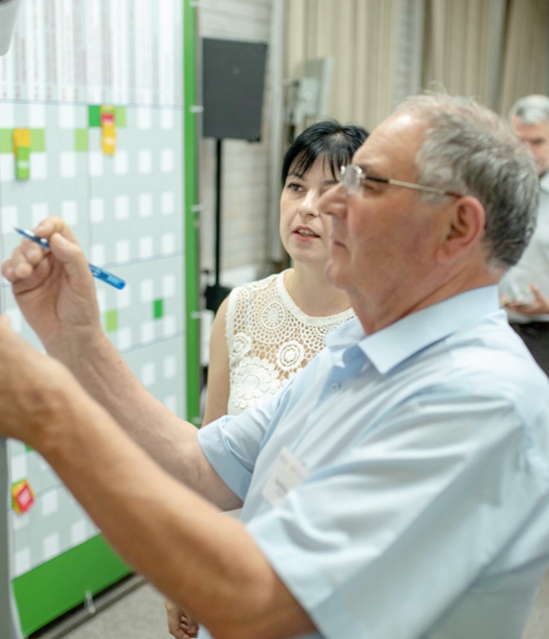
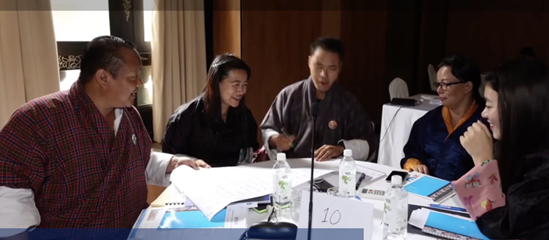
The WHO Guidance for Conducting a Country COVID-19 Intra-Action Review (IAR) was developed to guide countries to conduct periodic review(s) of their national and subnational COVID-19 response, so countries do not miss critical opportunities for learning and improvement to better respond to the COVID-19 outbreak in their countries. The IAR is a country-led facilitated process conducted during the COVID-19 outbreak in-country, bringing together a small group of COVID-19 responders with knowledge of the public health response pillars under review. Although IARs can be conducted online or face-to-face, the online format is recommended, especially if community transmission remains high in the country. The IAR will identify practical areas for immediate remediation and sustained improvement of the ongoing response.
WHO Expert Committee on Drug Dependence: forty-eighth report
WHO guidelines on expanding contraceptive options
Target product profiles for development of novel male contraceptive methods
Filovirus collaborative open research consortium research priorities for the ongoing Bundibugyo virus disease outbreak
Global framework to accelerate action on avian influenza
Global leprosy (Hansen Disease) update, 2025: Strengtheninga person-centered approach is integral to elimination of leprosy
Implementation guidance on the management of wasting and nutritional oedema (acute malnutrition) in infants and children aged under 5 years in inpatient and outpatient settings
GLP1-receptor agonists landscape: manufacturer mapping and regulatory pathways
WHO global research priorities and agenda for traditional, complementary and integrative medicine 2025–2034
Closing the childhood cancer survival gap through sustainable access to essential medicines: market shaping strategy (2026–2030)
Country cooperation strategy for WHO and Jordan, 2026–2030
Report of the joint meeting of ACSoMP and GACVS June 2026
WHO guidelines for malaria
Teaching with care: a practical guide for teachers to support mental health and well-being in schools
Global mapping of insulin manufacturers
18th edition, Epidemiological Bulletin WHO Health Emergencies Programme WHO Regional Office for South-East Asia, 9 September 2026. Reporting period: 24 August - 6 September 2026
Tobacco and infertility
User manual for the Quick and Immediate Risk Assessment (QIRA) algorithm for Member States
User manual for the Quick and Immediate Risk Assessment (QIRA) algorithm for Member States
User manual for the Member State Rapid Risk Assessment (MS-RRA) tool
COVID-19 IAR Online Training
Global Analysis of COVID-19 IARs
WHO Press Conference
Overview: The Country COVID-19 Intra-Action Review (IAR) is a facilitated process that brings together COVID-19 responders from multiple sectors for experience sharing and collective learning, and it has been modelled after the WHO After Action Review (AAR) methodology. This course provides a general introduction to the management and the facilitation of an IAR during the ongoing COVID-19 pandemic through presentations, quizzes and an assessment at the end of the course to test the knowledge acquired. It targets any individuals or entities involved in the preparedness of and response to the COVID-19 outbreak at the national or subnational levels, including but not limited to Government officials, WHO staff, public health professionals, communities and partners.
In line with the advice and temporary recommendations from the 4th, 5th, 11th and 12th IHR (2005) Emergency Committee on COVID-19, a global analysis of IAR reports received by WHO in collaboration with all six WHO regional offices and country offices has been conducted. A total of 83 reports from 57 countries comprising 2556 best practices, 2366 challenges, and 2859 recommendations were analyzed and triangulated with 27 interviews and 29 survey consultations with countries. This global analysis took a solution-oriented angle aimed at consolidating and showcasing the various strategies adopted by countries to address and overcome common challenges to the COVID-19 response, and to bring these learning to the rest of the world to encourage peer learning.
COVID-19 IAR Toolbox
IAR 14 Tools | 28 April 2021
Tool 5. Trigger question database
Tool 6.b Note-taking template: Pillar 10, COVID-19 vaccination
Tool 7.a Final report template
Tool 7.b Final report template: Pillar 10, COVID-19 vaccination
Tool 8. Participant feedback form
Tool 9. Participant feedback form - summary table
Tool 10. Exemplar story template
Tool 11. Conducting safe onsite COVID-19 intra-action reviews during the pandemic
Tool 12. Conducting effective online COVID-19 intra-action reviews during the pandemic
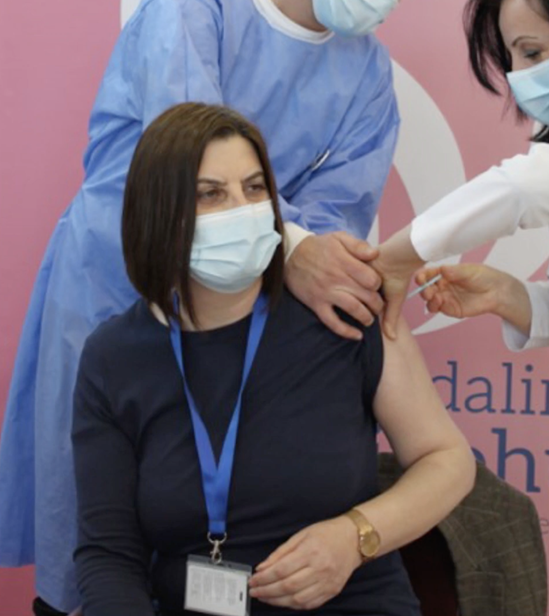
COVID-19 vaccination IAR
As countries conduct mini COVID-19 vaccine Post-Introduction Evaluation
(mini-cPIE), also called the COVID-19 Vaccination Intra-Action Review
(IAR), to review and adjust their COVID-19 vaccine roll-out, WHO will be
hosting regular clinics for countries to share learnings with peer
countries.
Academic Publications
May 2024 - Sharing lessons learned from COVID-19 vaccine introductions: a global community forum for countries
Sep 2021 - WER - Operationalizing COVID-19 intra-action reviews - preliminary findings
Oct 2020 - The Lancet Global Health - The necessity for intra-action reviews during the COVID-19 pandemic
Country Video Examples


SPH Portal
Contact
Simulation Exercises and Action Reviews (SER) Team
Risk Analytics and Action Reviews (RAR) Unit
Health Emergency Preparedness Department
Email: simexandreviews@who.int