Adolescent boys and men
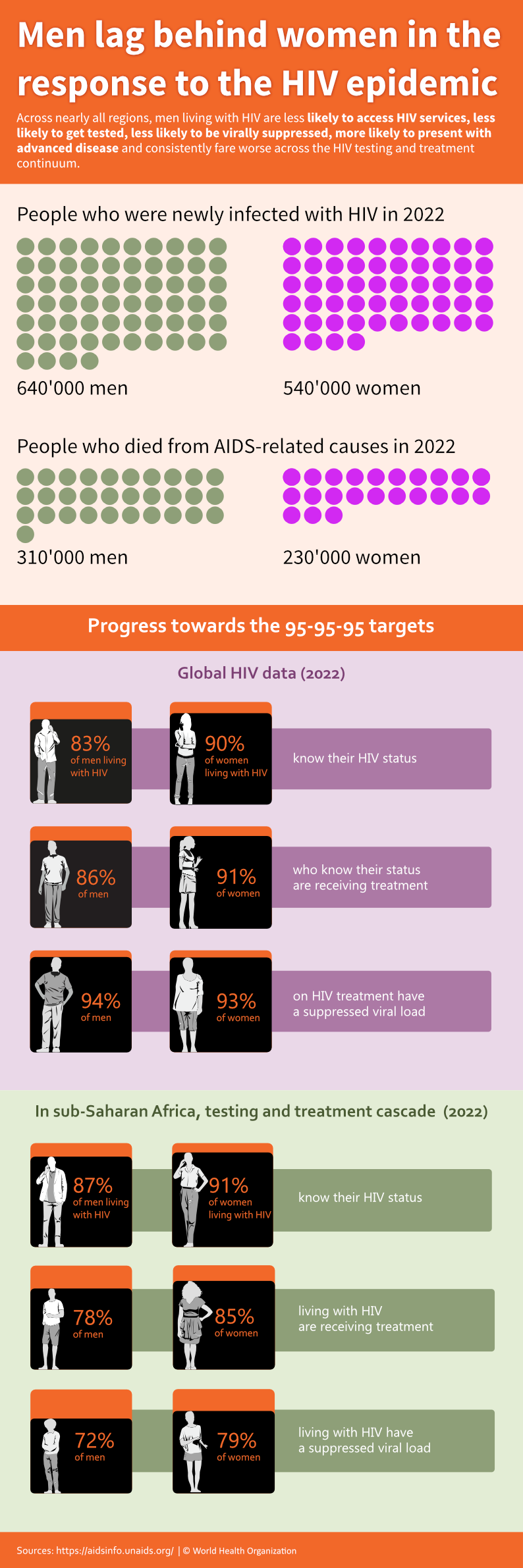
Globally, men accounted for 55% of total new HIV infections among adults in 2023. Outside of sub-Saharan Africa (SSA), men and boys accounted for 70% of HIV infections. In SSA, HIV cascade data shows that men are less likely than women to know their HIV status (85% for men vs 91% for women), initiate treatment (78% for men vs 85% for women), and reach viral suppression (71% for men vs 79% for women).
Global HIV data through 2023 show that progress towards the 95-95-95 targets (95% of people living with HIV know their HIV status, 95% of people who know their status are receiving treatment and 95% of people on HIV treatment have a suppressed viral load) for men lags behind at 83-86-94 compared to 91-94-93 for women. The testing and treatment cascade shows even greater disparity with antiretroviral therapy coverage considerably lower for men than women globally (72% vs 83%).
Across nearly all regions, men living with HIV are less likely to access HIV services, less likely to get tested, less likely to be virally suppressed, more likely to present with advanced disease and consistently fare worse across the HIV testing and treatment continuum.
Gender norms only partly explains why some men delay seeking care, but other factors are also at play. In many resource-limited settings, health systems are largely designed to address critical maternal and child health needs. Similar entry points for men are not commonplace.
It is important that we recognize and reach men in all their diversities including key populations such as people who inject drugs, people in prison and men who have sex with men who face numerous social and structural barriers to care, and those who have been previously excluded from health services.
Voluntary medical male circumcision (VMMC) is an important entry point for providing men and boys with broader, more appropriate health packages. Since VMMC was recommended by WHO and UNAIDS in 2007 as key to HIV prevention in high-prevalence settings, about 37.5 million men have accessed services across 15 priority countries in sub-Saharan Africa. This has contributed to averting new infections and related healthcare costs.
We need to shift away from blaming men for poor health-seeking behaviour. Men need, are willing and deserve to have access to services. Focused efforts are needed to reach and engage men to stay free from HIV, get tested regularly and start and stay on treatment. This will both improve male health outcomes and contribute to declines in new HIV infections also among women and girls.
News
/global-hiv-hepatitis-and-stis-programmes-(hhs)/alarming-decline-in-adolescent-condom-use-20183615.jpg?sfvrsn=aa46600c_4 "alarming-decline-in-adolescent-condom-use-20183615")
Publications
Improving HIV testing for men and linkage to services through faith platforms
Practical approaches and case-based models for reaching men and boys with integrated HIV services
Implementing WHO evidence-based interventions for adolescents and young adults living with and affected by HIV
A focus on adolescent sexual health in Europe, central Asia and Canada: Health Behaviour in School-aged Children international report from the 2021/2022 survey
Men and HIV: evidence-based approaches and interventions
HIV self-testing at workplaces: approaches to implementation and sustainable financing
Consolidated guidelines on HIV, viral hepatitis and STI prevention, diagnosis, treatment and care for key populations
Differentiated and simplified pre-exposure prophylaxis for HIV prevention: update to WHO implementation guidance
Enhancing uptake of voluntary medical male circumcision among adolescent boys and men at higher risk for HIV: evidence and case studies
Consolidated guidelines on HIV prevention, testing, treatment, service delivery and monitoring: recommendations for a public health approach
Improving men’s uptake of HIV testing and linkage to services
Preventing HIV through safe voluntary medical male circumcision for adolescent boys and men in generalized HIV epidemics: recommendations and key considerations - policy brief
Guidelines for managing advanced HIV disease and rapid initiation of antiretroviral therapy - policy brief
Journal articles
Defining the Global Research and Programmatic Agenda and Priority Actions for Voluntary Medical Male Circumcision for HIV Prevention
Men missing from the HIV care continuum in sub-Saharan Africa: a meta-analysis and meta-synthesis
Rapidly starting antiretroviral therapy to improve outcomes among disadvantaged groups
Frequency of visits to health facilities and HIV services offered to men, Malawi
HIV services in sub-Saharan Africa: the greatest gap is men
Shifting the narrative: from “the missing men” to “we are missing the men”
Impact of male circumcision on risk of HIV infection in men in a changing epidemic context – systematic review and meta‐analysis
Men & HIV: insights from sub-Saharan Africa
Other publications
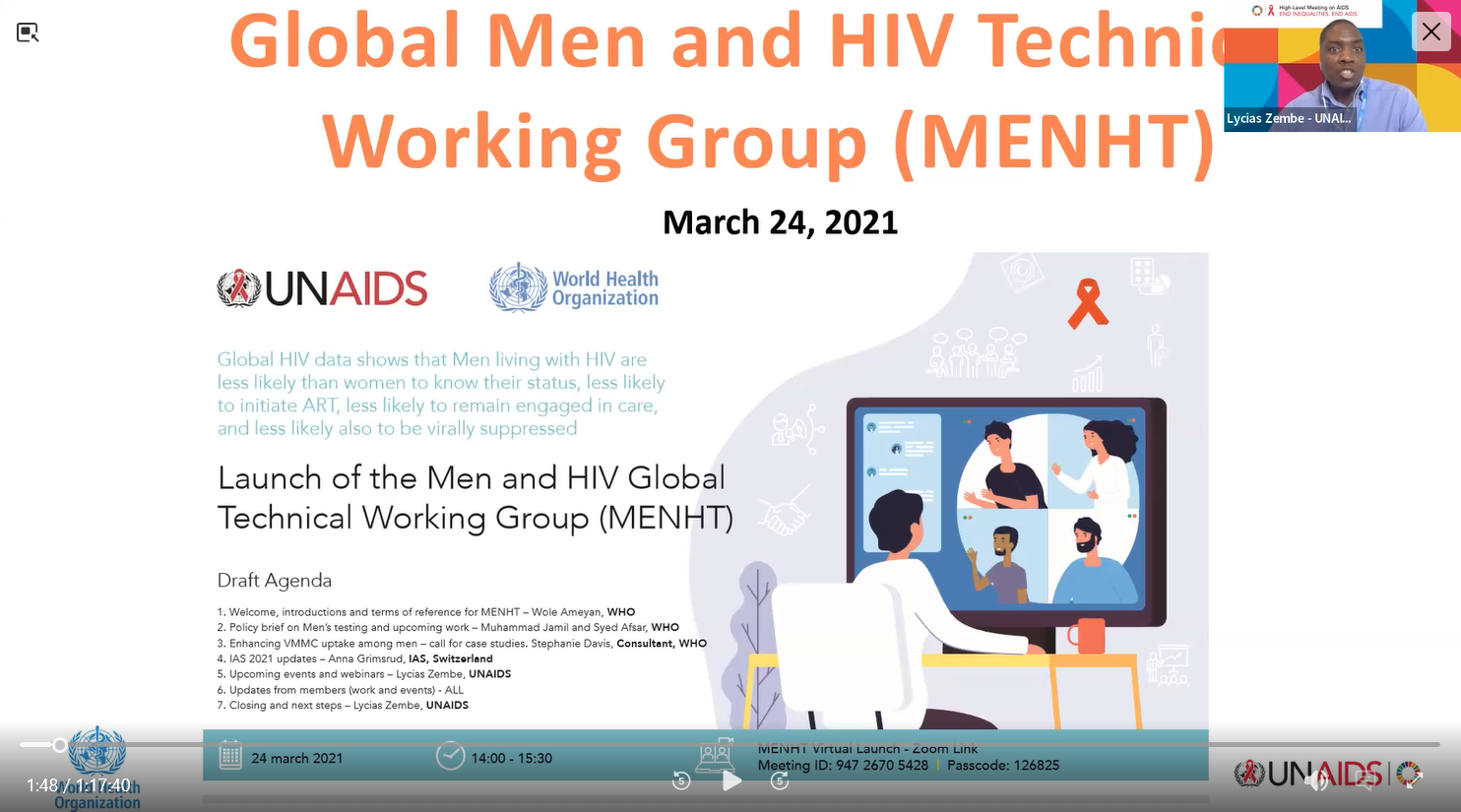
The Global Men and HIV Technical Working Group (MENHT)
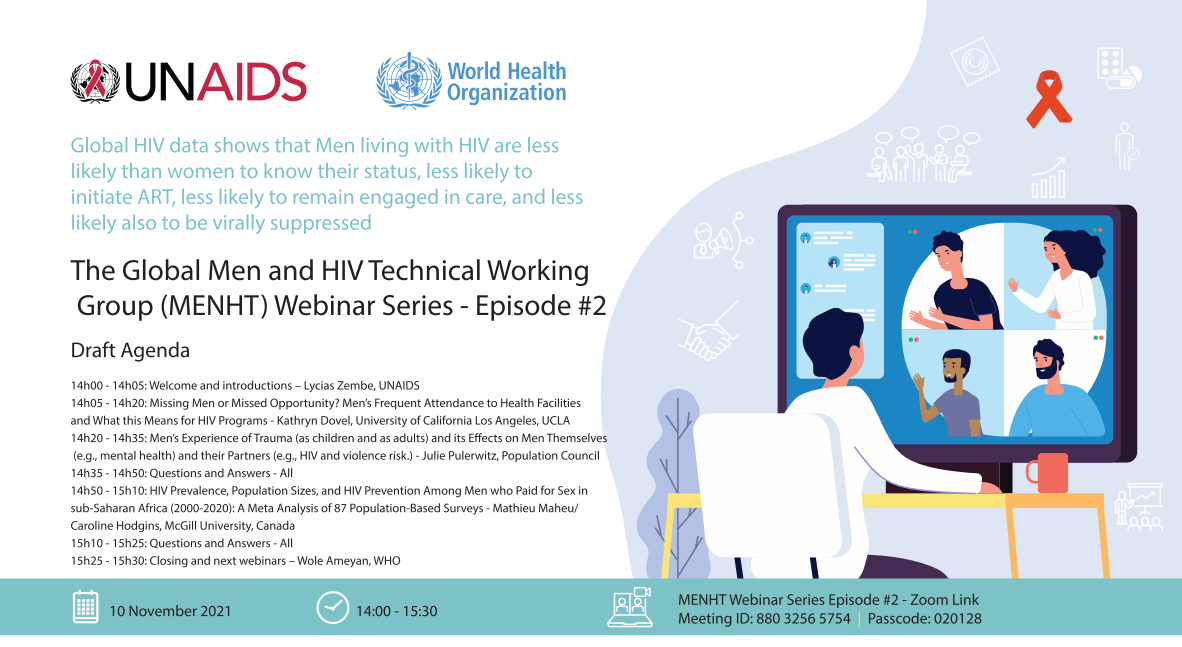
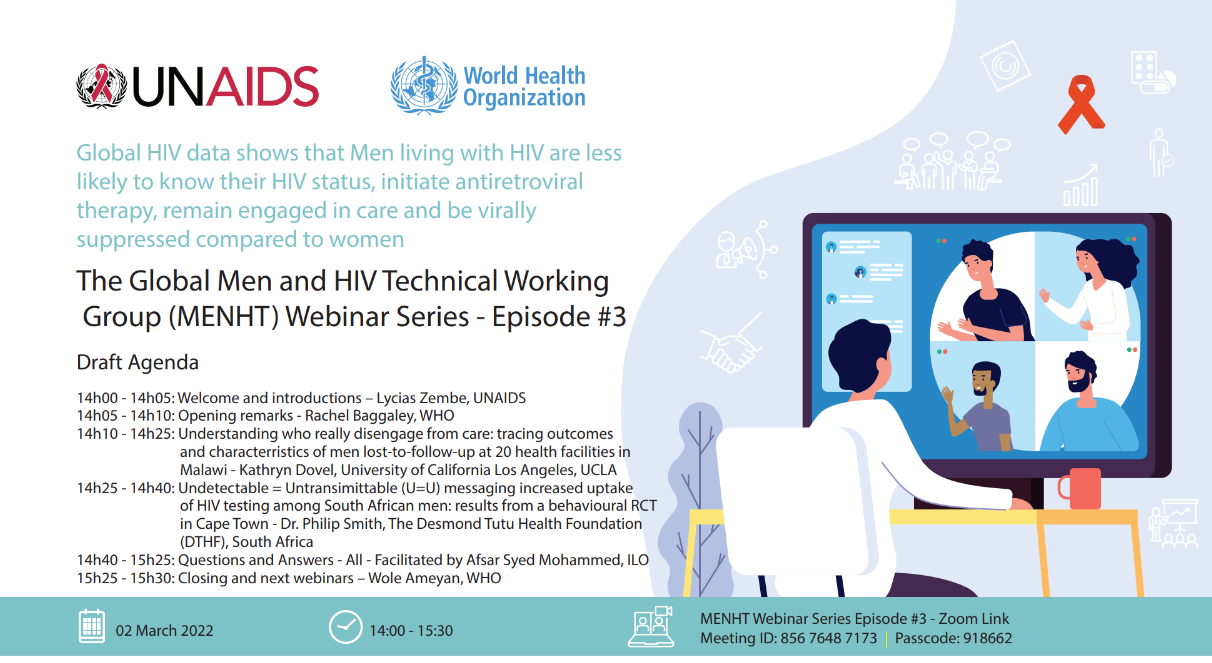
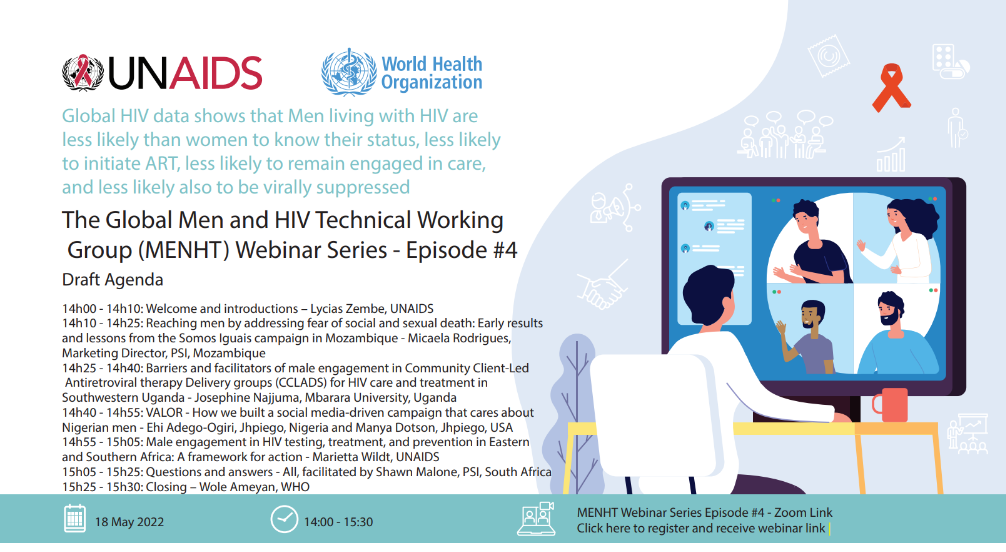
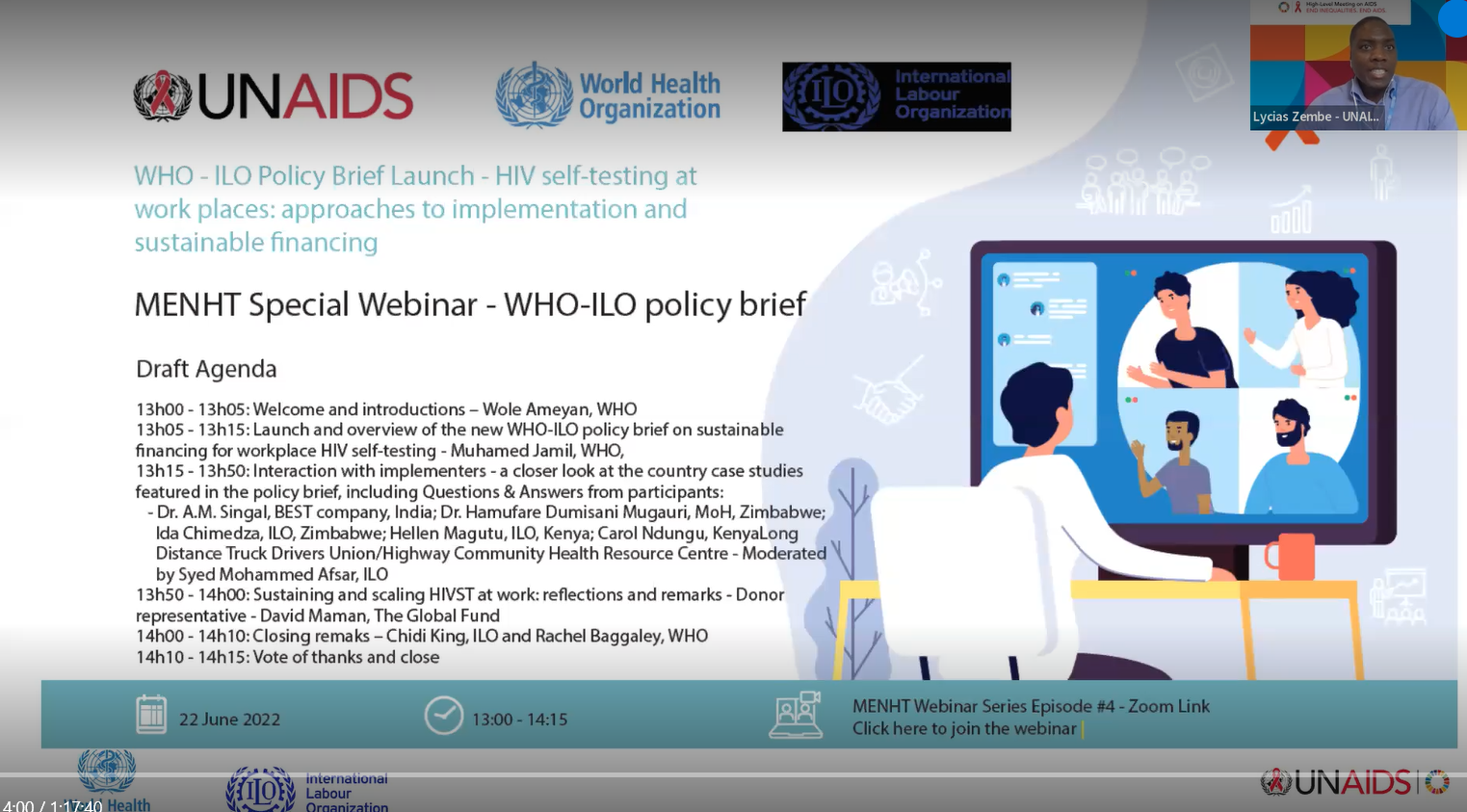
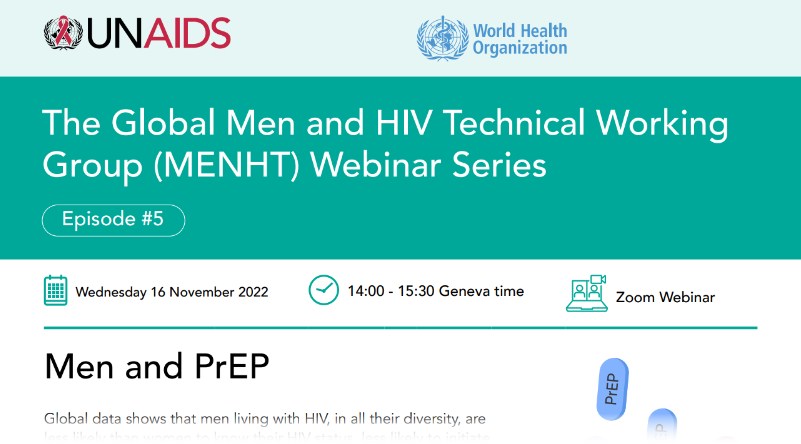
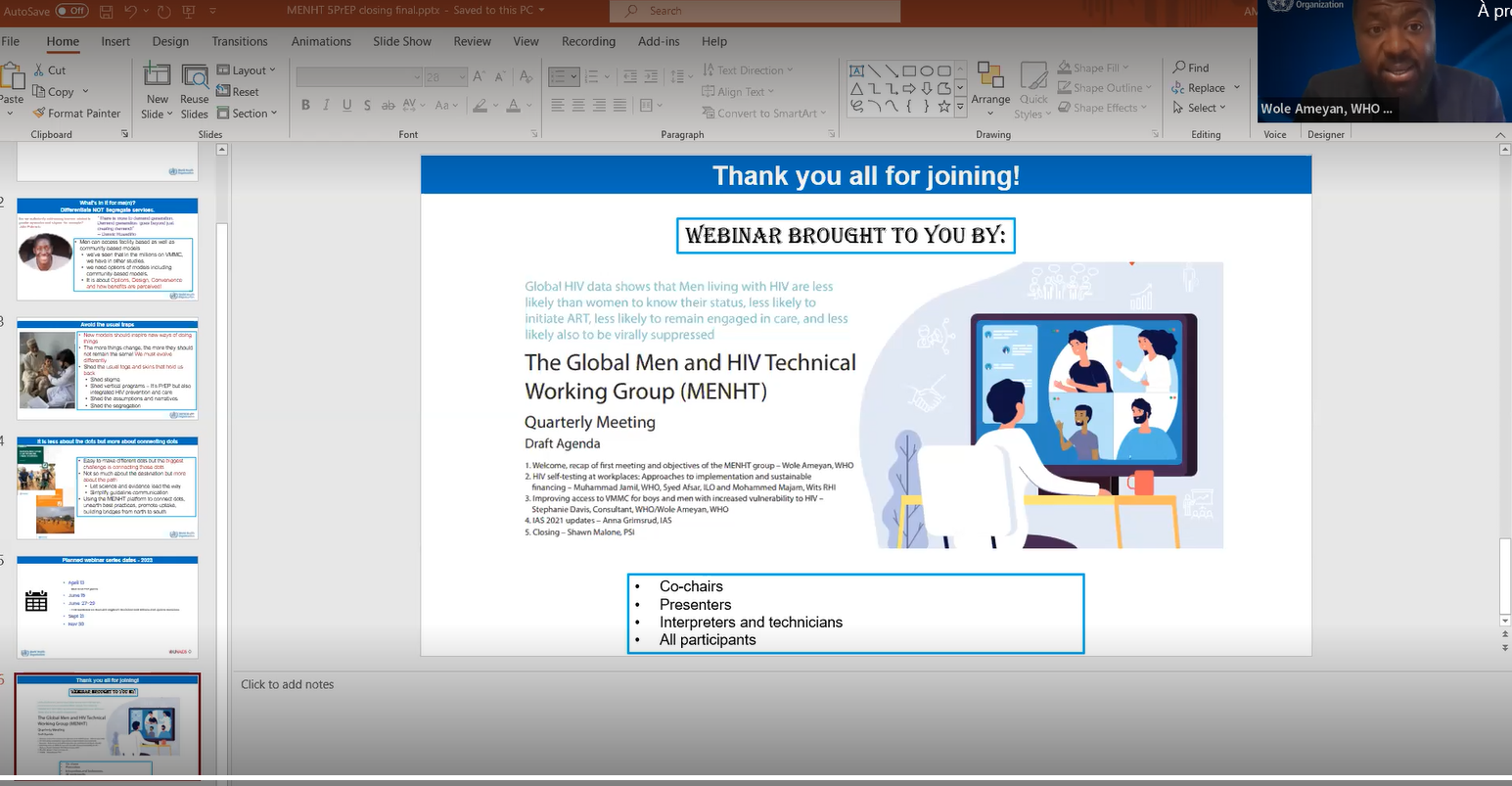
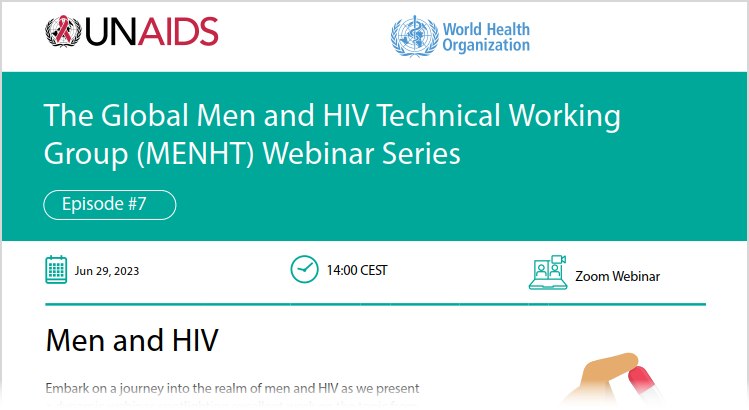
MENHT was launched in 2021 as a broad group of stakeholders and partners to coordinate global efforts, country engagement and galvanize action to address the men’s HIV services gap. It is jointly coordinated by WHO and UNAIDS, and co-chaired by the International Labour Organization (ILO), the International AIDS Society (IAS), and Population Services International (PSI). MENHT has a membership of 45 experts and advocates on men and operates an annual workplan. As part of its workplan, MENHT coordinates quarterly webinar series focusing on issues related to men and HIV services gap and highlighting interventions and good practices addressing these gaps.
MENHT workplan 2022 and 2023 | MENHT terms of reference
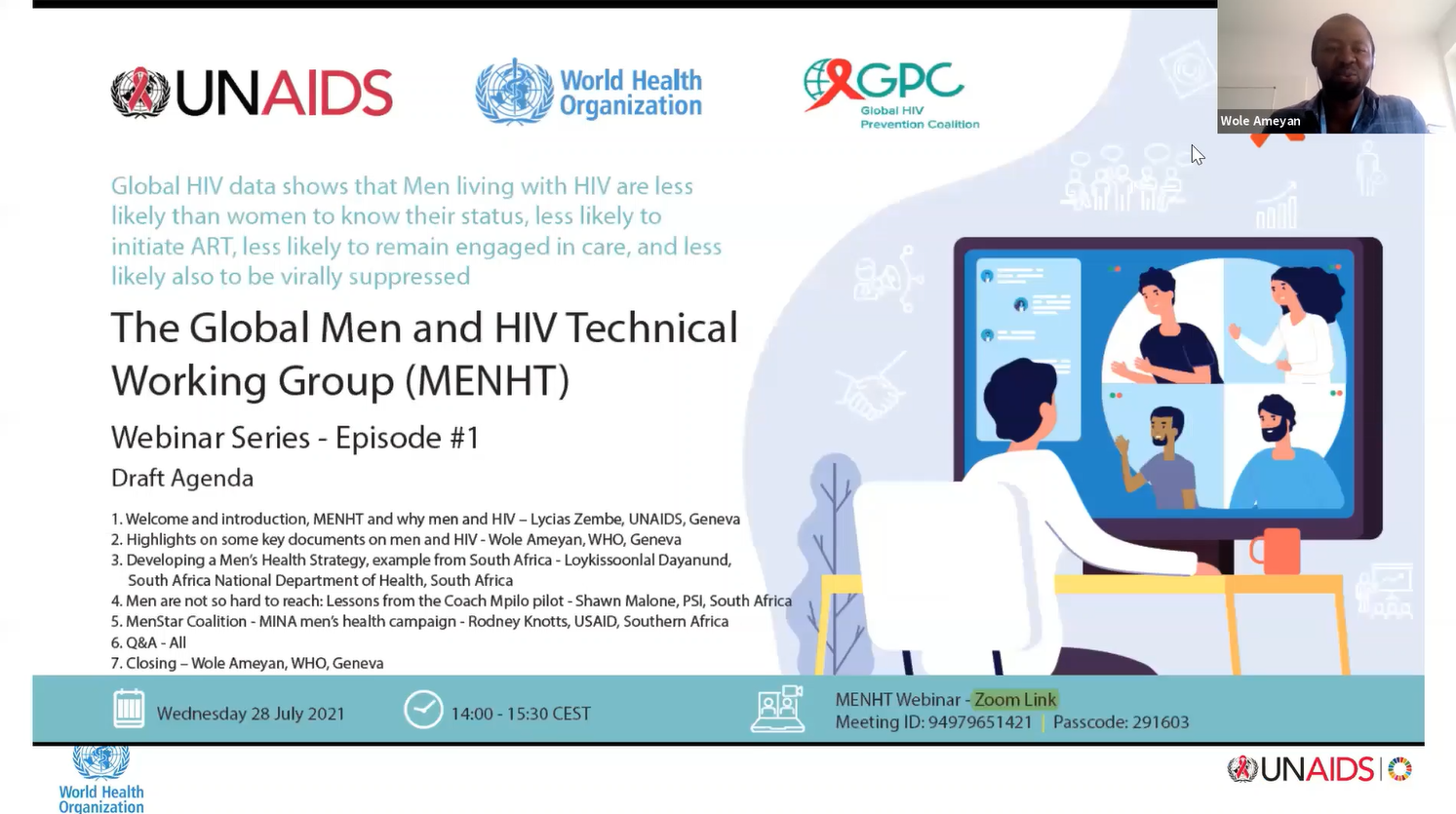 Episode 1 - 28 July 2021